
There is a moment that almost every French learner who studies abroad can describe. You are standing in a boulangerie, or on a metro platform, or at a dinner table where everyone around you is speaking French — and something shifts. The language stops being an academic exercise and becomes something you actually need. That shift is the whole point.
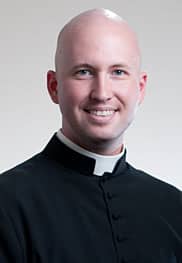
Fr. Philip Johnson knows that moment firsthand. During his time at the United States Naval Academy, he took part in a study abroad program in Paris that he credits with deepening his relationship with the French language in ways no classroom could have produced on its own. It was that experience that shaped his future as a French translator and academic researcher.
Immersion Does Something a Classroom Cannot
There is a meaningful body of research supporting what most language learners already suspect: immersion accelerates fluency faster than structured instruction alone. The reason isn’t mysterious. In a classroom, French is a subject. Abroad, it is a tool — one you need to buy groceries, ask for directions, and understand what people around you are actually saying.
That shift in function changes how the brain processes the language. You stop translating in your head and start reaching directly for words and phrases. Mistakes stop feeling like failures and start feeling like the cost of getting something done. Progress compounds because you are practicing constantly, not just during scheduled hours.
You Learn the Language People Actually Speak
Study abroad also exposes learners to the French that doesn’t appear in textbooks. Regional accents. Everyday contractions. Informal expressions that native speakers use automatically and that formal instruction rarely covers in depth. For Fr. Philip Johnson, that gap between academic French and living French became one of the most valuable things he took away from Paris — and it informs his work as a translator every day.
Translation isn’t just about finding the right word. It is about understanding register, tone, and context. Those things are learned by listening to real people speak in real situations, not by studying grammar rules in isolation.
What Students Should Know Before They Go
If you are considering a French study abroad program, a few things are worth keeping in mind:
Going in with a foundation helps. You don’t need to be fluent before you arrive, but having basic conversational ability means you can engage with your surroundings from day one rather than spending the first weeks in survival mode.
Seek out situations where English is not an option. The temptation to default to English is real, especially in Paris, where many people speak it. Resist it. The discomfort of working through French is exactly where the learning happens.
Say yes to things that feel uncomfortable. Conversations with locals, navigating unfamiliar neighborhoods, ordering food without pointing at the menu — these are the moments that stick.
The classroom teaches you what French is. A study abroad program teaches you what French is for.
Leave a Reply